The Oracle Of Delphi And The Pythia On A Day Tour: What Visitors Can Still See
The Pythia is attested from the 8th century BCE at the latest, and the ruins of the temple that housed her oracle still stand on the Parnassus slope. Here is what survives, what the museum holds, and which day trips walk you through it with a licensed guide.
Short answer
The Temple of Apollo ruins date to the 4th century BCE and still stand where the oracle operated, from at least the 8th century BCE to the late 4th century CE as ancient sources record. The Omphalos stone, the 4th-century theatre and the Archaic Castalian Spring can all be seen, and the full ticket costs €20.
The ancient Greeks considered Delphi the centre of the world, marked by the Omphalos, the navel stone, and the sanctuary on the southwestern slope of Mount Parnassus was the seat of the Pythia, the high priestess consulted as a major oracle. The ruins of the temple that housed that oracle still stand, and a day trip from Athens puts you on the same terraces. Delphi has been part of Parnassos National Park since 1938 and a UNESCO World Heritage Site since its inscription in 1987.
Where The Oracle Of Delphi Actually Stood
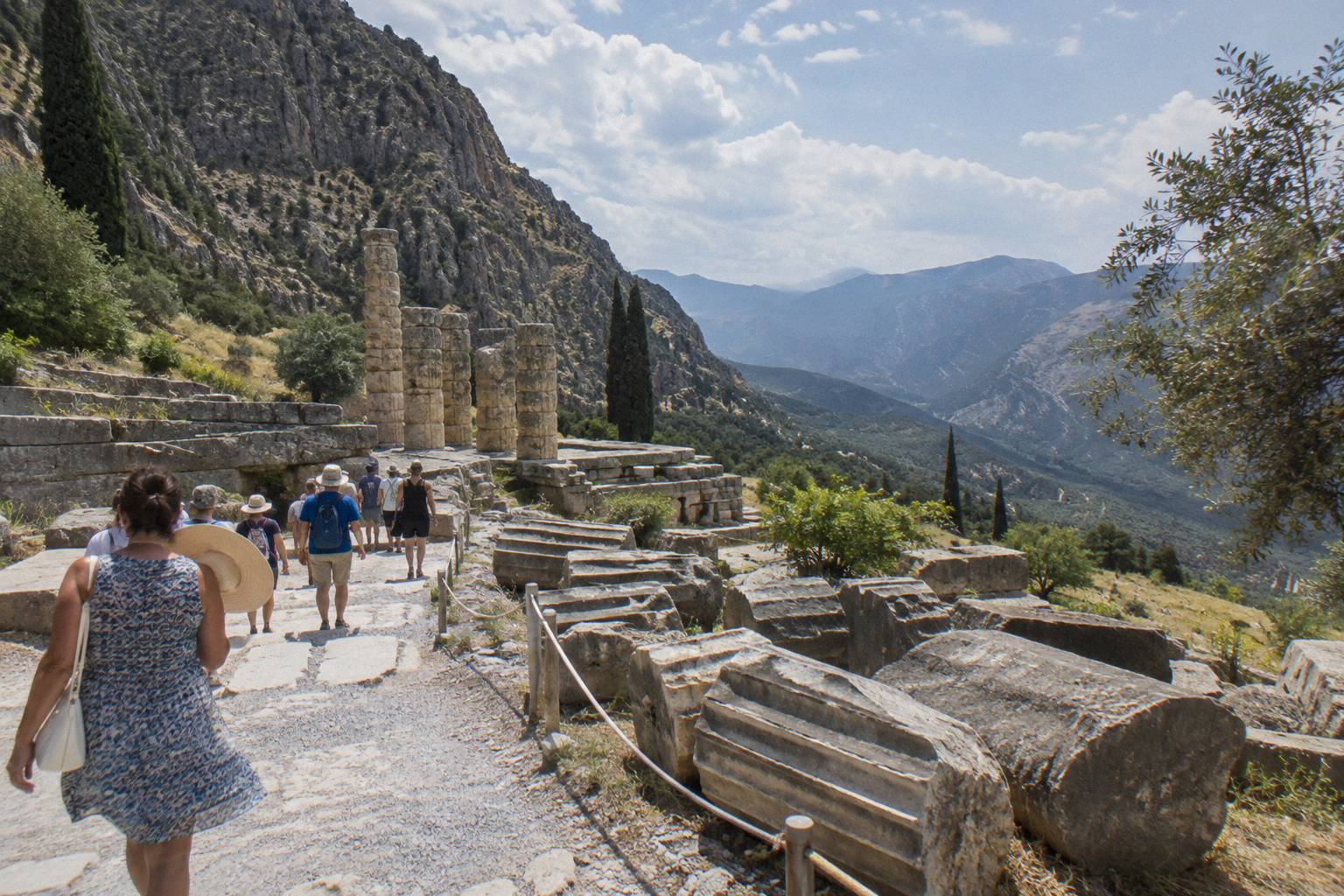
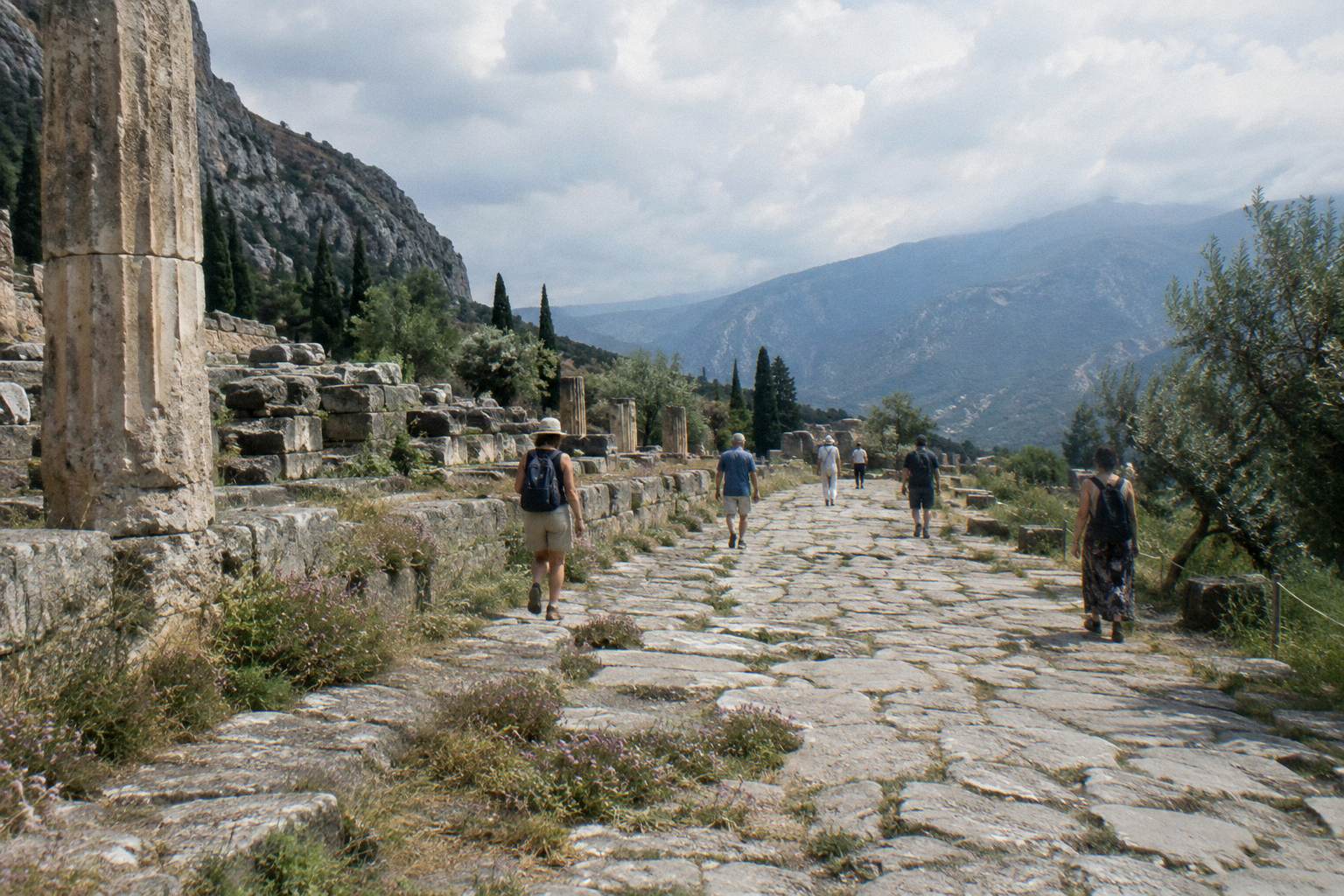
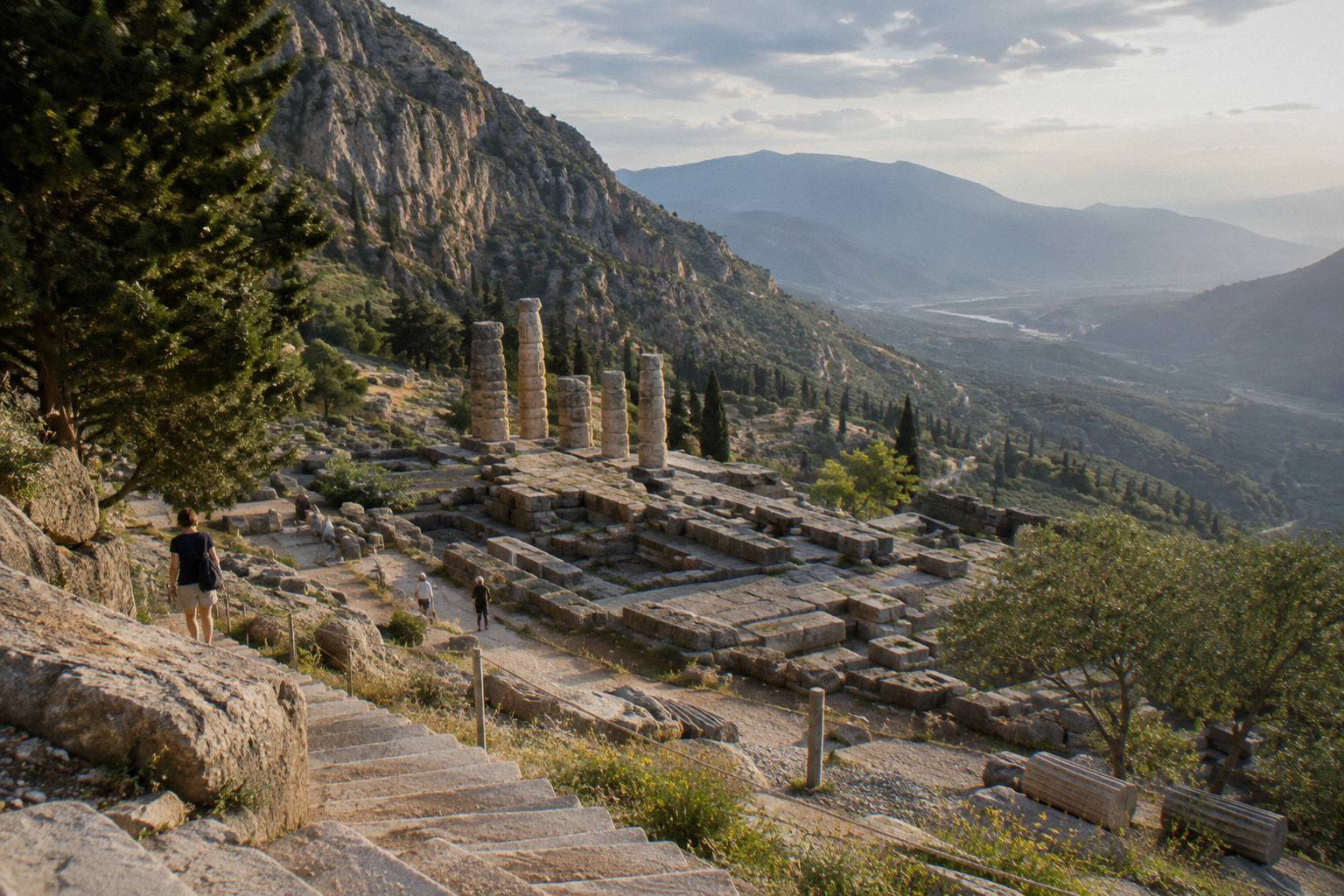
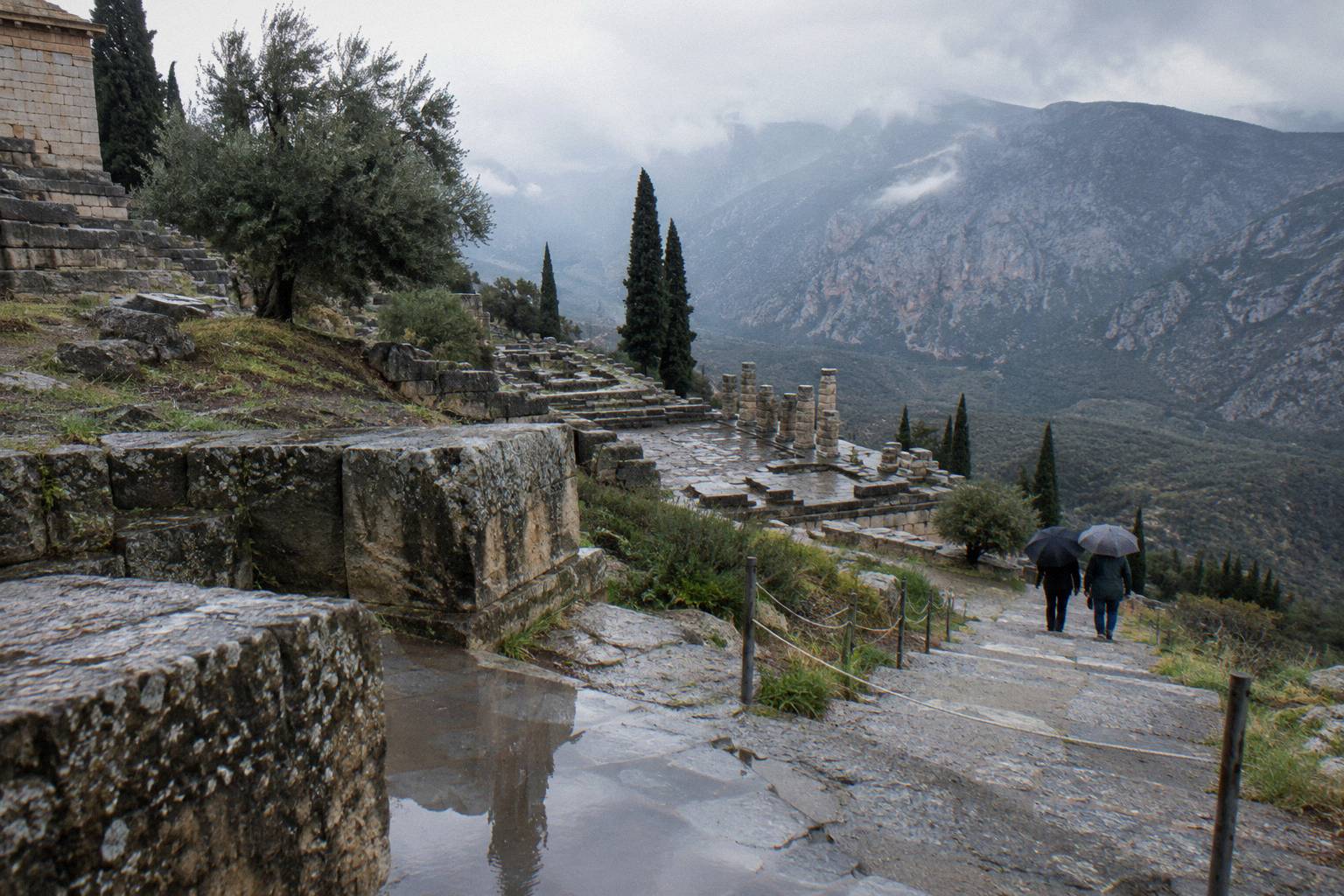
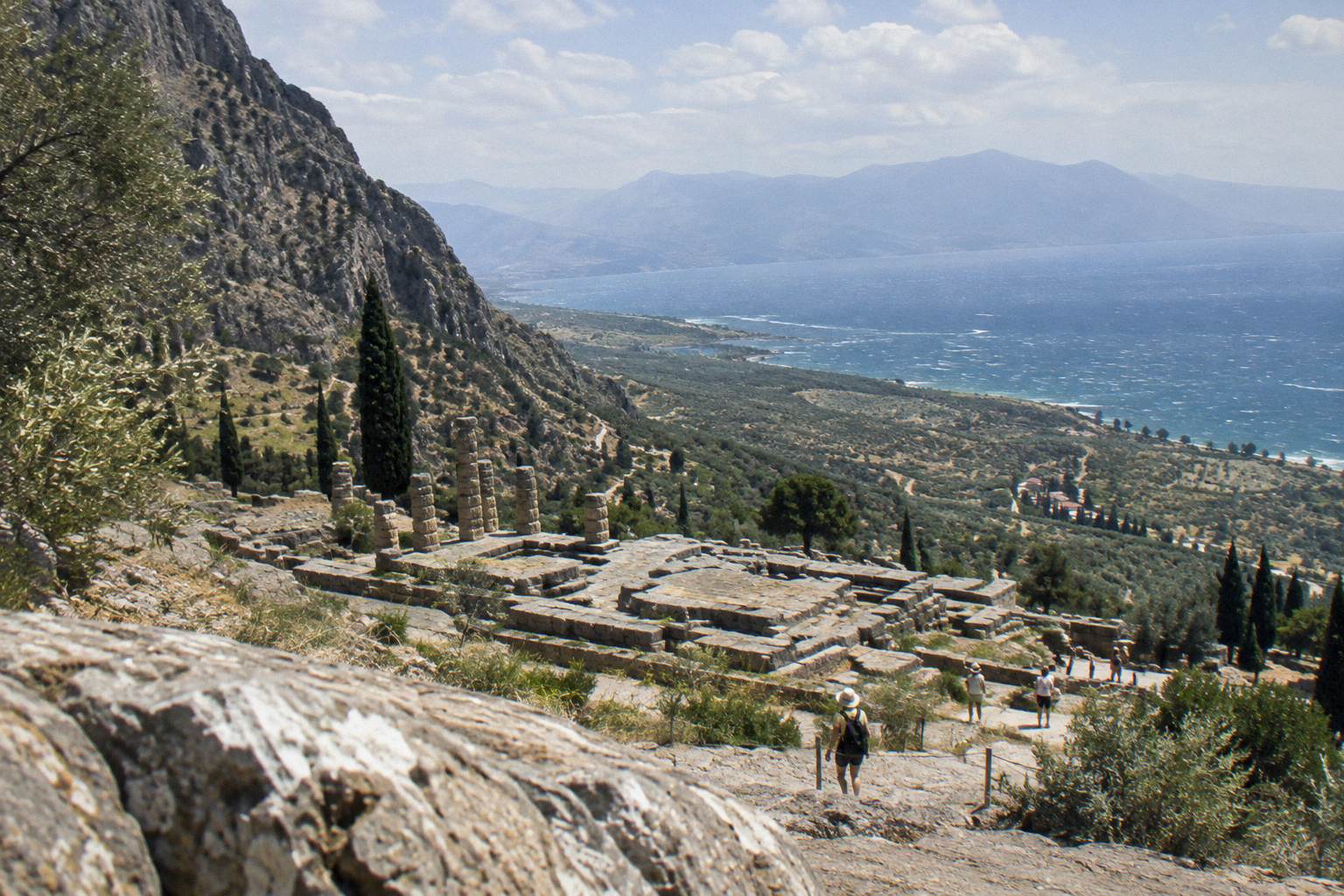
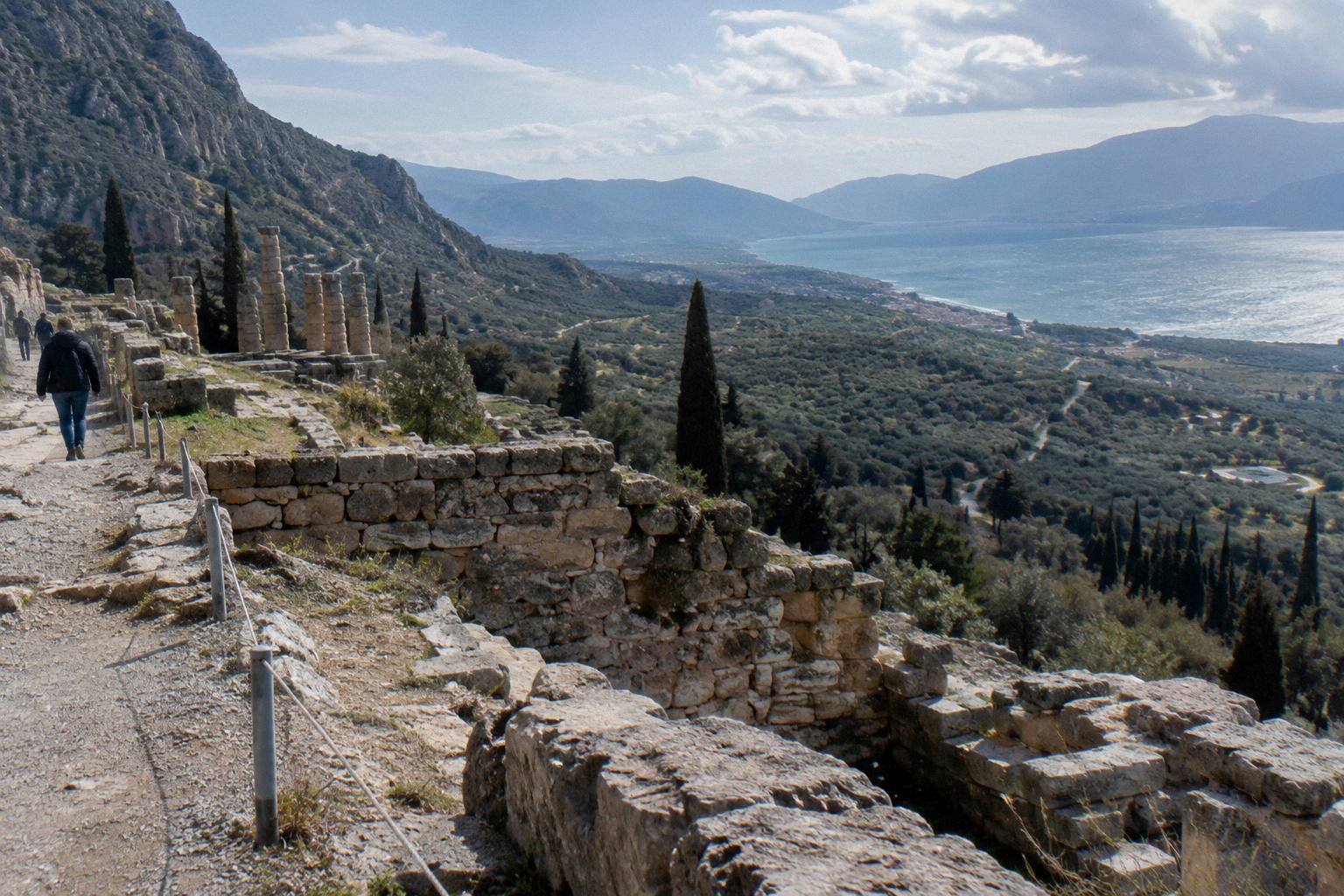
The oracle operated from the Temple of Apollo, and the surviving temple ruins on the site today date to the 4th century BCE. The temple stood at the heart of the sanctuary on the southwestern slope of Mount Parnassus, where the Sacred Way climbed past treasuries and monuments. A visitor on any Delphi day trip walks up that same Sacred Way to the temple foundations.
The sanctuary grew around the temple over centuries. City-states built treasuries along the Sacred Way to hold offerings, and the route up the hillside is still the route visitors take. The temple itself survives as foundations and re-erected columns rather than a complete building, but its position, terraced into the slope with the valley of Amphissa below, is unmistakable. Standing on the temple platform and looking down the terraces, the shape of the sanctuary reads clearly even in ruin: a processional route climbing to a single focal building.
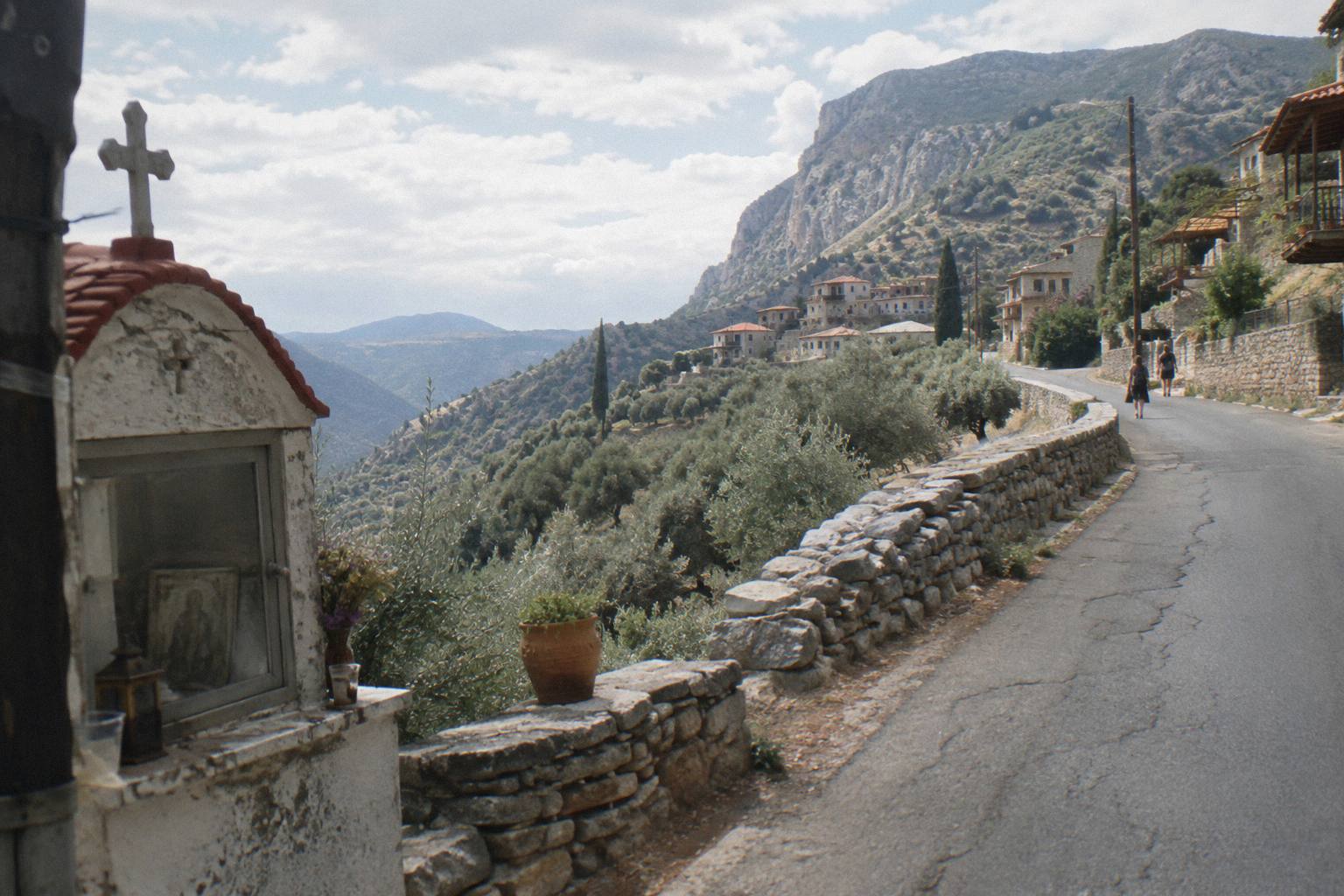
The wider site sits within the municipality of Delphi in Phocis, about 180 km by road from Athens, around 2.5 hours of driving without stops via the A1 to Thebes, then Livadeia and Arachova. A tour's own duration always wins over any drive-time estimate, and the day trips from Athens run from 10 to 12 hours. The last stretch of the road climbs through Arachova, the mountain town on the south slope of Parnassus at about 950 to 970 m, so the approach to the sanctuary is itself part of the experience: the valley opens below as the road bends up toward the site.
For the monument-by-monument walk itself, the Temple of Apollo and how a guided walk covers it goes stop by stop up the Sacred Way.
Who The Pythia Was, And What Ancient Sources Record
The Pythia is attested from the 8th century BCE at the latest, and the oracle operated until the late 4th century CE. Ancient sources record this, and Herodotus and Plutarch are the major ones; Plutarch served as a priest at Delphi. What a visitor sees today is the setting those sources describe, not the ritual itself.
Herodotus records consultations of the oracle in his Histories, and Plutarch, who served as a priest at the sanctuary, wrote about the oracle's operation and decline. Beyond those attestations, the record belongs to archaeology: the temple platform, the theatre cut above it, and the objects in the museum. The span between the two is remarkable on its own: well over a thousand years of continuous consultation, ending only in late antiquity.
No trance, vapour or prophecy story is needed to make the place worth the drive, and none is told here. The documented facts alone carry the site: a sanctuary that drew delegations from across the Greek world for centuries, in a location chosen for its position on the mountain rather than any modern spectacle. Cities sent representatives with questions of war, colonization and law, and the answers they carried home shaped decisions recorded in the same sources.
The sanctuary's monuments are covered section by section below, and the question of who may interpret them for you has its own breakdown in licensed guide or driver only, who speaks inside Delphi.
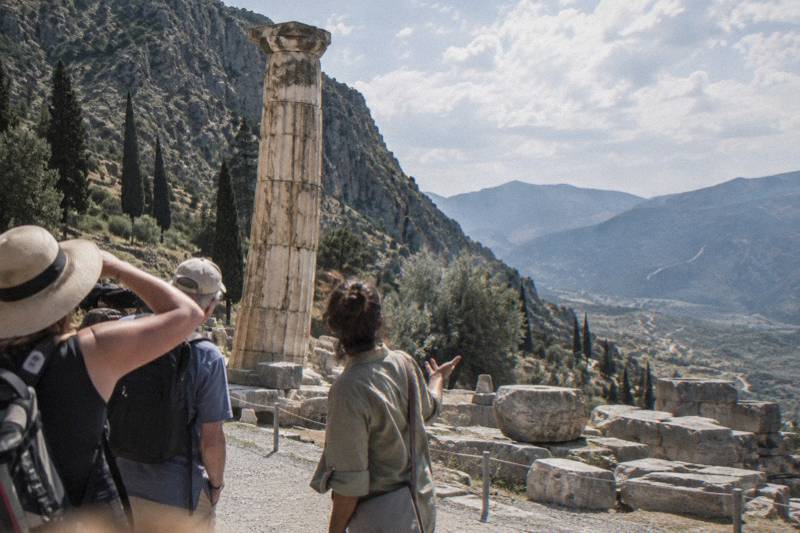
Reading the sources before the visit changes what the ruins mean. Knowing that Plutarch served here turns a pile of stone into a working sanctuary with a staff, a schedule and a documented end, and that is the frame a licensed guide works from on the guided trips. A guide who can point to the temple platform and name the sources that mention it gives the stones a chronology that a signboard cannot match in the same few minutes.
The trips that tell this story best are the ones with a licensed guide inside the site, and three of them stand out for a first visit. CHAT Tours, Licensed Guide Day runs an expert licensed guide throughout the day with a guided tour of the site and the museum, from €29 per person; you can also check availability for your date.
Which Trips Put A Licensed Guide Beside The Temple Of Apollo
A licensed guide inside the site comes with only some of the day trips: CHAT Tours and the Tag Athens premium trip include one throughout the day, and Keytours pairs an English guided tour with a multilingual audio guide. On most private trips the driver is not licensed to accompany you in any site, and a licensed guide is available on request at extra cost.
That distinction is the single biggest difference between the trips, larger than vehicle class or price. A driver with deep historical knowledge can narrate the drive and the viewpoints, but the guided walk among the temple foundations is a licensed guide's job on the trips that state it. The CHAT Tours licensed guide day states it plainly: expert licensed guide throughout the day, whisper devices so the group hears the guide, and a guided tour of both the site and the museum. It rates 4.4 across 2,259 reviews and runs 10 hours from €29 per person.
The whisper devices matter more than they sound. The site is open air and the terraces carry voices in every direction, so a guide speaking into a headset rather than shouting over the terrace keeps the commentary audible from the first treasury to the temple platform. On a crowded summer day that is the difference between hearing the oracle's history and catching fragments of it.
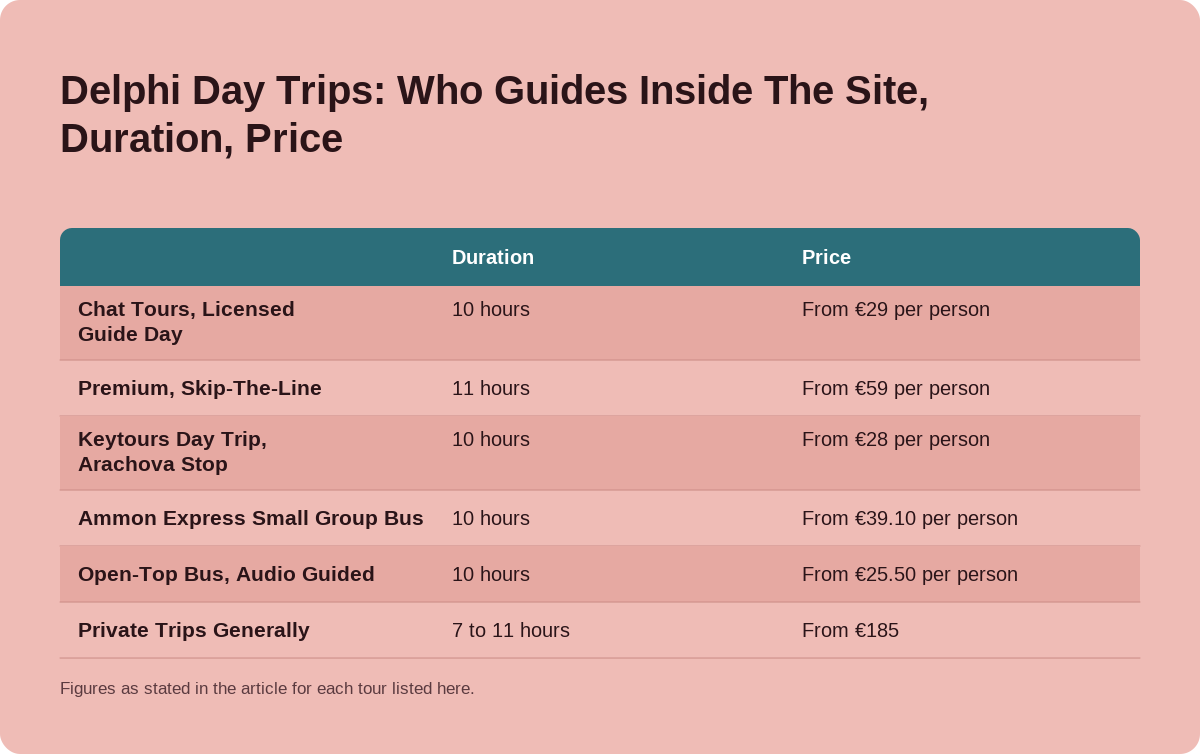
The table below shows who actually speaks inside the site on each trip type, per each trip's own entry.
| Trip | Who Speaks Inside Delphi | Duration | Price |
|---|---|---|---|
| Chat Tours, Licensed Guide Day | Expert licensed guide, site and museum, whisper devices | 10 hours | From €29 per person |
| Premium, Skip-The-Line, 11 Hours | English licensed tour guide throughout the day | 11 hours | From €59 per person |
| Keytours Day Trip, Arachova Stop | English guided tour of site and museum plus multilingual audio guide | 10 hours | From €28 per person |
| Ammon Express Small Group Bus | Archaeologist trip attendant and audio app; guided tour inside the site excluded | 10 hours | From €39.10 per person |
| Open-Top Bus, Audio Guided | Escort on the bus and virtual-reality commentary; not a licensed guide inside | 10 hours | From €25.50 per person |
| Private trips generally | Driver not licensed to accompany you in any site; licensed guide on request, extra cost | 7 to 11 hours | From €185 |
Keytours Day Trip, Arachova Stop takes the hybrid approach: a guided tour of the site and museum in English, a multilingual audio guide and headsets, free time on site, and a stop in Arachova, from €28 per person. It rates 4.7 across 2,032 reviews. The entry ticket is excluded unless the option is selected, and pickup is excluded; the trip starts from its meeting point. The free time after the guided portion is the moment to return to a monument the group passed quickly, whether the theatre above the temple or the Omphalos.
The premium skip-the-line trip from Tag Athens includes an English licensed tour guide throughout the day, guided tours of site and museum, whisper devices and skip-the-line service, from €59 per person. It rates 4.7 across 1,371 reviews, runs 11 hours, has a minimum age of 4, and starts from a meeting point near the Acropolis metro station; entrance fees come only with the option with tickets. The extra hour over the standard 10-hour day gives the guide room to take the site at a slower pace.
For travelers weighing the middle rows of the table, the two bus options trade a licensed guide for a lower price. The Ammon Express Small Group Bus sends an archaeologist trip attendant and an audio app instead of a guided tour inside the site, at from €39.10 per person over 10 hours. The Open-Top Bus trip is cheaper still at from €25.50 per person, also 10 hours, with an escort on the bus and virtual-reality commentary, but no licensed guide once you are through the gate. On both, what you learn among the ruins depends on your own phone or headset rather than a person walking beside you.
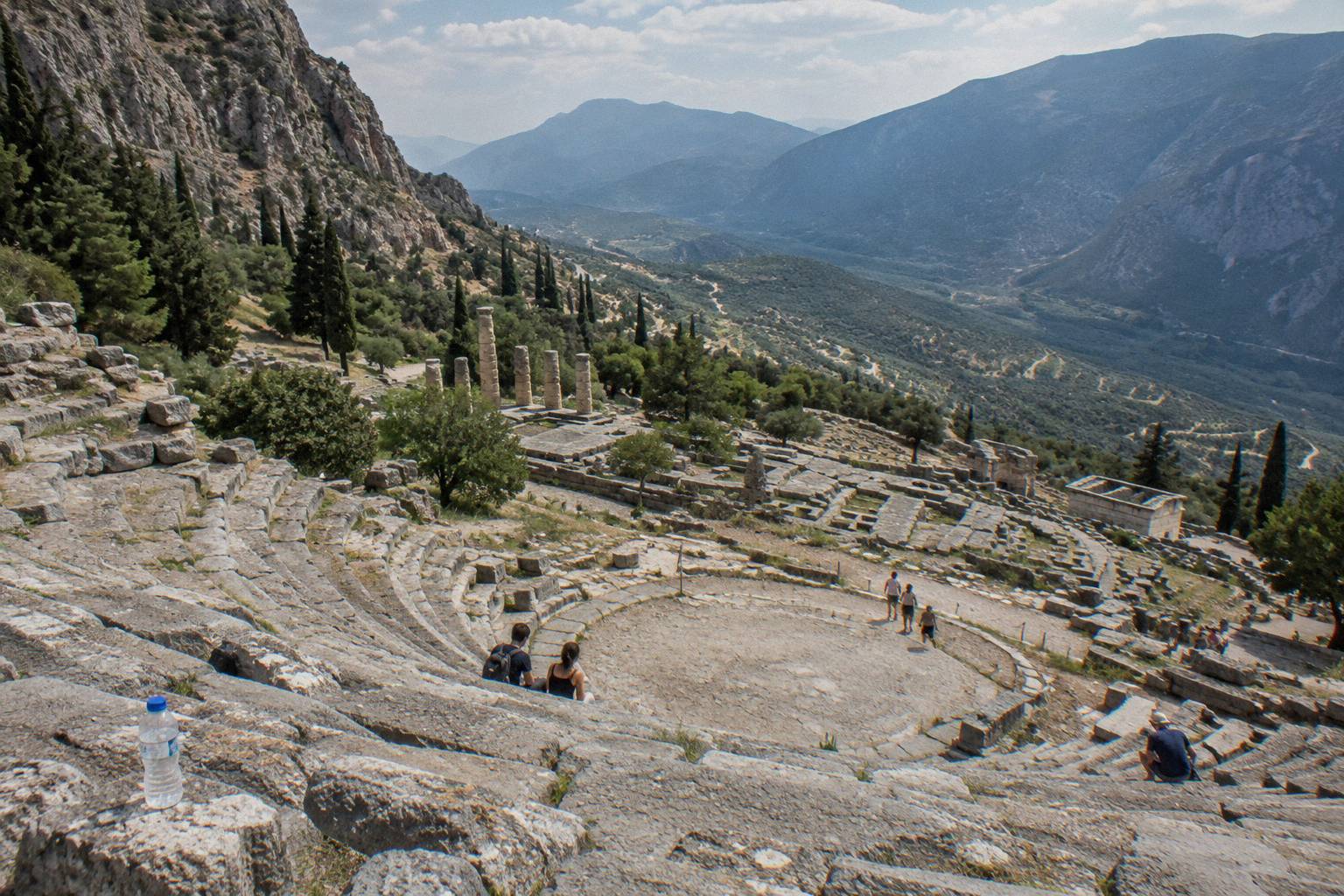
If a licensed guide matters and the premium day is out of budget, the arithmetic favors the two cheapest guided options. Chat Tours and Keytours both put a guide inside the site for under €30 per person, roughly half the premium price, though without the skip-the-line service, the extra hour, or the guided element that runs throughout the day. Note the ticket terms before comparing totals: on Keytours the entry ticket is excluded unless you select the option, and on the premium trip entrance fees come only with the tickets option, so the headline prices are not the final cost of the day.
What You Can Still See On Site Today
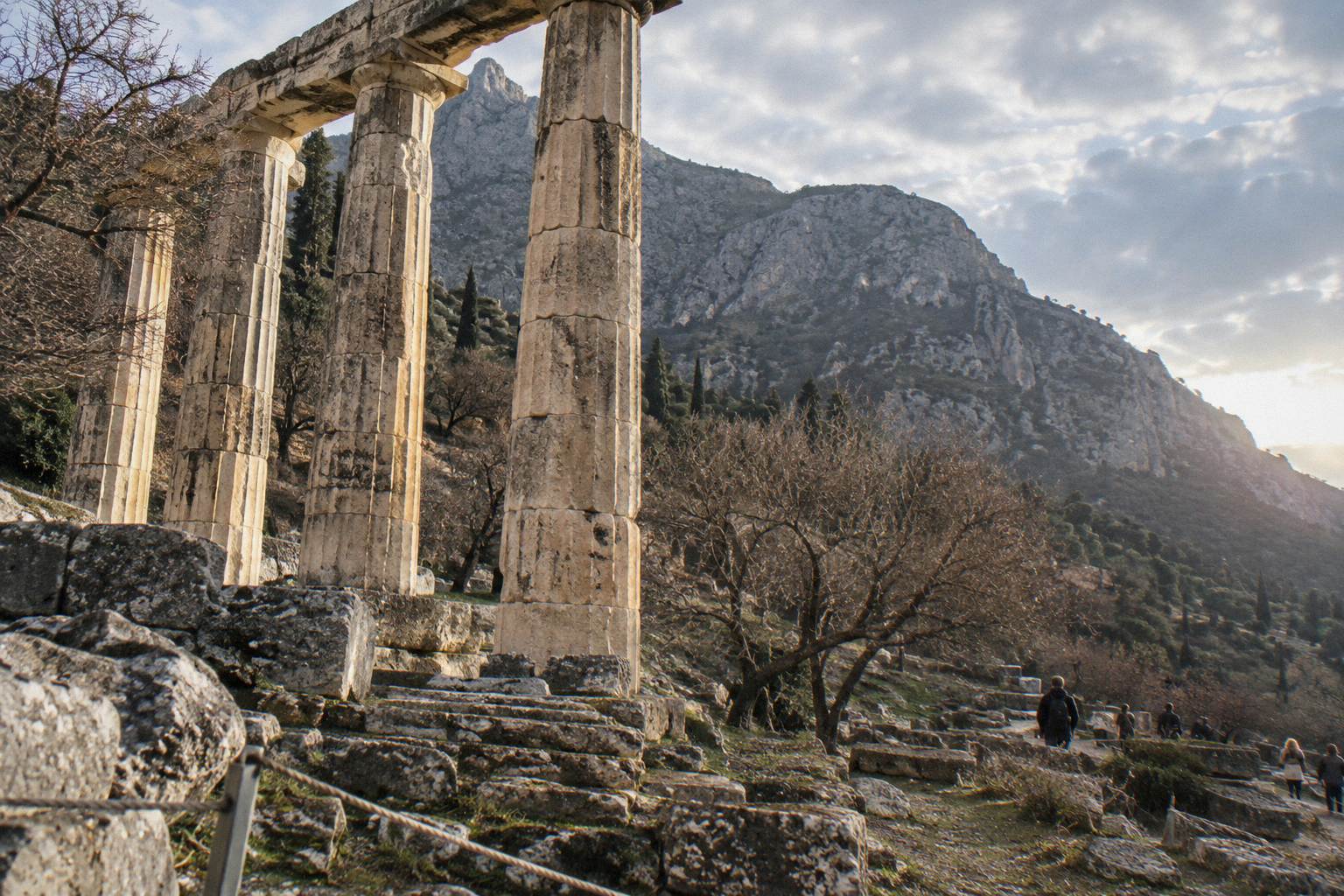
Four oracle-era monuments survive in recognizable form: the 4th-century BCE Temple of Apollo ruins, the theatre of the same century, the Archaic Castalian Spring and the Tholos of Athena Pronaia, a circular marble building of the early 4th century BCE with three re-erected columns. The Omphalos stone marked the ancient centre of the world.
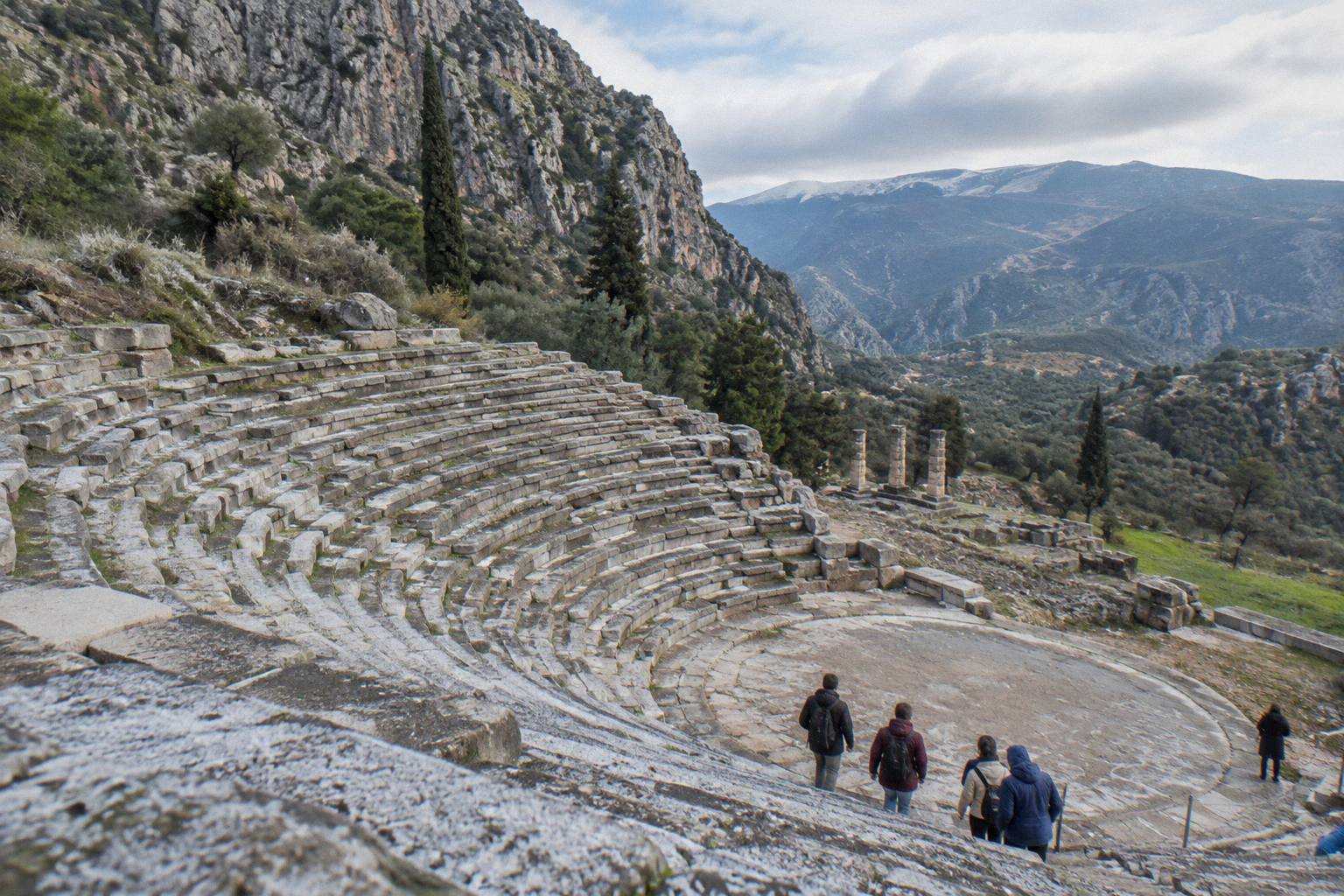
The theatre sits above the temple, cut into the slope, and dates to the 4th century BCE. The Castalian Spring is older, Archaic, a fountain house used for ritual purification of pilgrims and the Pythia. Some areas can close separately; the Stadium, the Castalian Spring and the Athena Pronaia sanctuary can have separate closures or restrictions, so check the Ministry of Culture page before counting on a specific corner of the site.
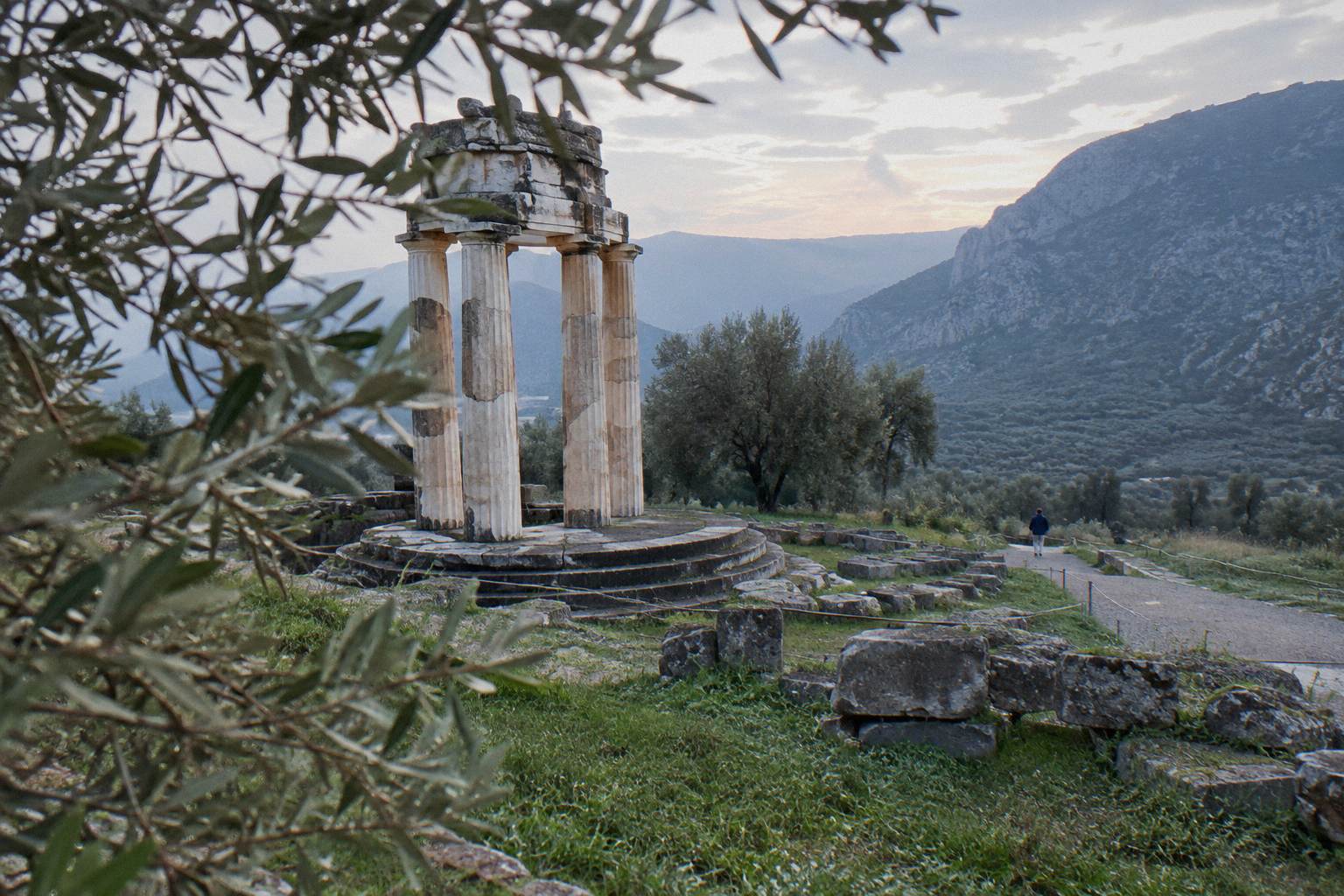
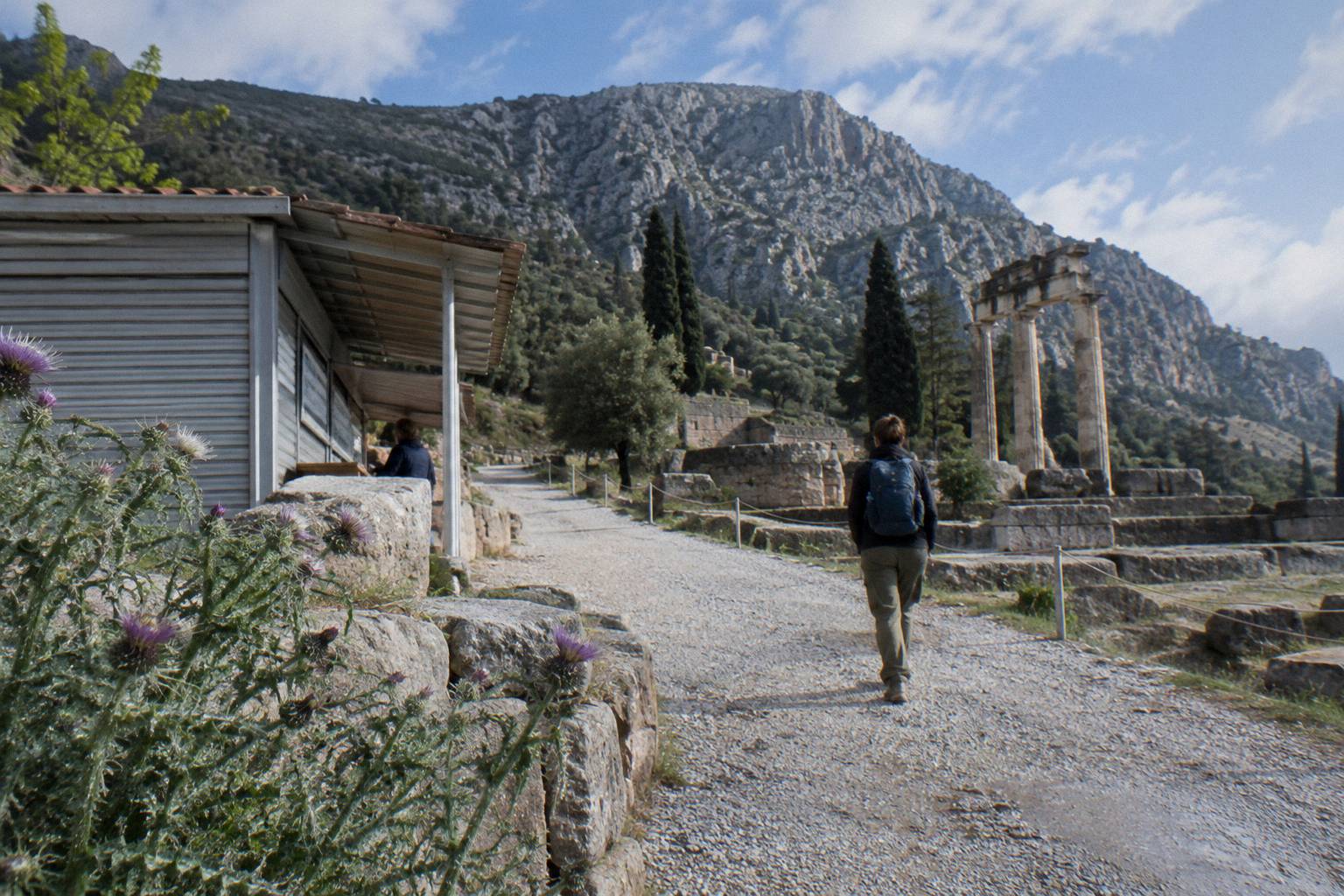
The Tholos at Marmaria, below the main sanctuary, is an early 4th-century BCE round building, but it is not on every itinerary: the Pronaia and Tholos visit is not included on the CHAT Tours day trip. If the Tholos matters to you, check the itinerary of the trip you book rather than assuming the whole archaeological zone is covered. The building is a separate walk from the Sacred Way, down toward the sanctuary of Athena, and its three re-erected columns around a circular foundation make it the site's most recognizable silhouette after the temple itself.
| Monument | Date | Condition Today | Note |
|---|---|---|---|
| Temple of Apollo | 4th century BCE ruins | Foundations and re-erected columns | Housed the oracle |
| Theatre | 4th century BCE | Cut into the slope above the temple | |
| Castalian Spring | Archaic | Fountain house remains | Purification of pilgrims and the Pythia |
| Tholos of Athena Pronaia | Early 4th century BCE | Three re-erected columns, circular marble | Not included on the CHAT Tours day trip |
| Omphalos | No date given | The navel stone marking the world's centre |
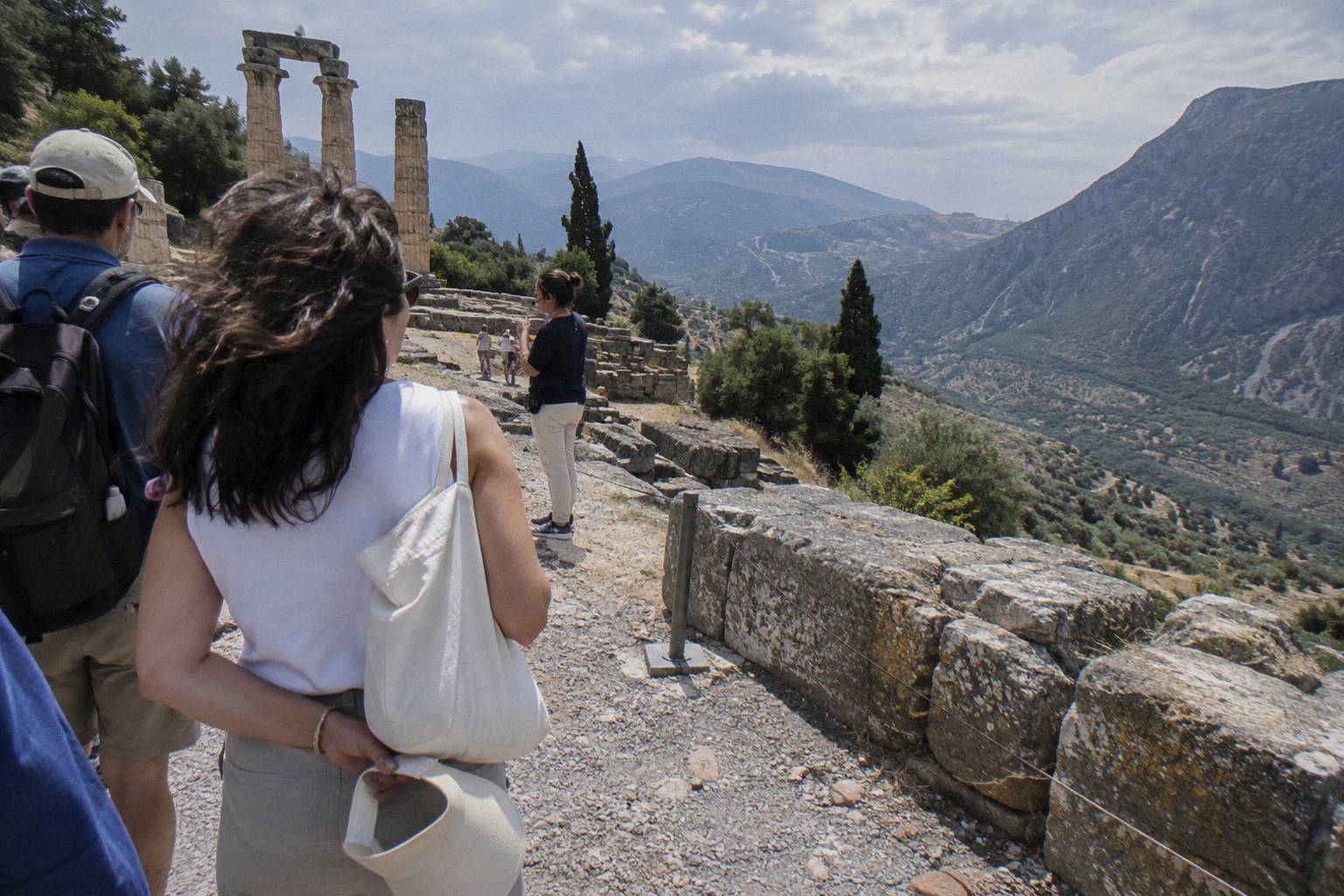
The Delphi Museum: The Objects By Name
The Charioteer is the museum's centerpiece, a bronze figure cast about 474 BCE. Around it sit the marble twins Kleobis and Biton, the Sphinx of Naxos that once stood on a column at Delphi, gold found beneath the Sacred Way, and carved reliefs from the Siphnian Treasury. The melody notation is the earliest known, evidence that music was written down at the sanctuary. Together the rooms do what the outdoor ruins cannot: they give the sanctuary back its color, its sculpture and its dedications, objects that the weathered stone outside has long since lost.
No tour can be promised to dwell on any particular object; what the trips state is a guided tour of the museum on the licensed-guide days. How long you linger at the Charioteer is your own call, and the Delphi Museum and the Charioteer on a tour page covers the collection in more depth.
Tickets, Hours And The Official Schedule
The full ticket to the archaeological site and museum of Delphi costs €20, the reduced ticket €10, and one ticket covers both. Winter hours, 1 November to 31 March, run 08:30 to 15:30 with last admission at 15:10; summer hours, 1 April to 31 October, run 08:00 to 20:00 with last admission at 19:40, shortening through autumn.
The schedule is the official Ministry of Culture schedule, seasonal and changing by year, so treat the hours as the pattern rather than a promise for a travel date. Summer closing steps down from 1 September: 19:30 to 15 September, 19:00 to 30 September, 18:30 to 15 October and 18:00 to 31 October, with last admission always 20 minutes before closing. In winter the 15:30 closing is the tighter constraint: a day trip that reaches Delphi in the early afternoon has a shorter window, which is one reason winter itineraries can feel more compressed than the same trip in summer.
Free admission days on the schedule are 6 March, 18 April, 18 May, the last weekend of September, 28 October, and every first and third Sunday from 1 November to 31 March. Closed days are 1 January, 25 March, Easter Sunday, 1 May, 25 December and 26 December; the site is otherwise open daily.
Whether a tour covers that ticket is a per-trip fact. On CHAT Tours and the premium trip, tickets come only if the ticket option is selected; on Keytours the entry ticket is excluded unless the option is selected; on the Ammon Express small group, both the entrance and the guided tour inside the site are excluded, though an archaeologist trip attendant and an audio guide app come with the trip, from €39.10 per person with a rating of 4.7 across 348 reviews.
| Season | Site Hours | Last Admission | Ticket |
|---|---|---|---|
| Winter, 1 Nov to 31 Mar | 08:30 to 15:30 | 15:10 | €20 full, €10 reduced, site and museum |
| Summer, 1 Apr to 31 Oct | 08:00 to 20:00 | 19:40 | Same ticket, no separate site-only price |
| 1 to 15 Sep | 08:00 to 19:30 | 19:10 | Same ticket |
| 16 to 30 Sep | 08:00 to 19:00 | 18:40 | Same ticket |
| 1 to 15 Oct | 08:00 to 18:30 | 18:10 | Same ticket |
| 16 to 31 Oct | 08:00 to 18:00 | 17:40 | Same ticket |
The full opening pattern, including the free days and closures, is laid out in Delphi opening hours and seasons for a day tour.
What Trips People Up When Booking A Delphi Tour?
Three things trip travellers most often: assuming the entry ticket is in the price when it comes only with a ticket option, expecting the driver to guide inside the site when the driver is not licensed to accompany you there, and counting on the Tholos and Pronaia sanctuary when some itineraries leave them out. Each one is settled by reading the trip's own entry before booking.
The ticket question is the most expensive. Six of the shared day trips price from €25.50 to €144 per person, and on several the €20 site ticket is excluded unless an option is ticked. Booking the no-ticket option and finding out at the gate is a common and avoidable annoyance. The fix takes a minute at checkout: look for the option that names the ticket, and if it is not there, budget the €20 separately.
The guide question runs the other way: on most private trips the driver is expressly not licensed to accompany you in any site, and a licensed guide is on request at extra cost, for example €200 on the Private Greece Tours trip and €420 for two guides on the H.P. Tours two-day trip. If hearing the oracle's story beside the temple is the point of the day, book a trip that states a licensed guide inside. A private car with a knowledgeable driver is a good product for readers who want the schedule to themselves, but it is a different product from a guided walk.
The third is the add-on stop. Arachova, the mountain town about 10 to 15 minutes from Delphi at roughly 950 to 970 m, appears on several itineraries as a stroll or an optional stop, and the Krya springs at Livadeia appear on exactly one trip. Nothing beyond a trip's own stops should be assumed, and no stop gets a promised duration unless the entry gives one. Arachova is known for formaela cheese, with a protected designation of origin, and a stop there is a stroll through a working town rather than a staged photo opportunity.
The Open-Top Bus audio-guided trip is the cheapest way onto the site, from €25.50 per person with a rating of 4.7 across 447 reviews, but its escort speaks on the bus with virtual-reality commentary rather than guiding inside, and entrance fees come only with the option. Delphi Day Tours keeps the per-trip differences side by side so the choice stays visible.
Once the ticket option, the guide question and the stops are settled, the day itself is straightforward: a long drive, a climb up the Sacred Way, a museum with the Charioteer at its center, and the drive back. The oracle's story is the reason most visitors make the trip, and the ruins plus the museum carry it well: the temple platform where the Pythia was consulted, the theatre above it, and the bronze that survived the centuries underground. Pick the format that matches how much of that story you want told beside the stones.
Common Questions About The Oracle Of Delphi
Where Did The Oracle Of Delphi Actually Speak?
The oracle operated from the Temple of Apollo, whose surviving ruins date to the 4th century BCE. The temple stood at the heart of the sanctuary on the slope of Mount Parnassus, and its foundations and re-erected columns can be walked today on the Sacred Way.
How Long Did The Pythia Deliver The Oracle?
Ancient sources record the Pythia from the 8th century BCE at the latest until the late 4th century CE. Herodotus and Plutarch, who served as a priest at Delphi, are the major ancient sources for the oracle.
Can You Still See The Omphalos Stone At Delphi?
The Omphalos, the navel stone that marked Delphi as the ancient centre of the world, is among the monuments connected to the sanctuary. Its position in the sanctuary is part of what a guided walk of the site covers.
Which Day Trips Include A Licensed Guide Inside The Site?
CHAT Tours and the Tag Athens premium trip state a licensed guide throughout the day, and Keytours includes an English guided tour of the site and museum. On most private trips the driver is not licensed to accompany you in any site, and a licensed guide is on request at extra cost.
What Does The Delphi Museum Hold From The Oracle Era?
The museum holds the bronze Charioteer of Delphi, about 474 BCE, Kleobis and Biton, the Sphinx of Naxos, golden treasures found beneath the Sacred Way, reliefs of the Siphnian Treasury and the earliest known notation of a melody.
How Much Does It Cost To See The Oracle's Sanctuary?
The full ticket is €20 and the reduced ticket €10, covering both the archaeological site and the museum. Whether a day trip includes that ticket is a per-trip fact: several trips add it only with a ticket option.